Citizen-built AI is AI built by the business people who know the process, not only by engineers. On flexday.ai, citizen-built and architect-built solutions run on the same platform, with the same governance, so a business user's prototype can become a production system without a rewrite. Business users start in a no-code conversational builder; architects extend the same solution in low-code or full code.
Every enterprise has more AI ideas than engineers. The people closest to the work, HR partners, buyers, consumer affairs leads, plant managers, know exactly what should be automated. Citizen development lets them build. The risk is shadow AI: apps nobody secures, measures or maintains. This post explains how to get the speed of citizen development without that risk.
What is a citizen developer in AI?
A citizen developer is a business user who builds software with no-code or low-code tools, without being a professional programmer. In AI, a citizen developer might build an HR policy assistant, a supplier status bot or an analytics summary, then share it with their team.
Why do citizen-built AI apps fail to reach production?
Most no-code AI tools are built for prototypes. When a citizen-built app gets popular, three problems appear:
No governance. The app ignores user permissions, so it can expose data a user should not see.
No accuracy proof. Nobody can say how often it is right.
The rewrite. IT has to rebuild it on an approved stack, losing months and often the original intent.
How does flexday.ai support both citizen and architect builders?
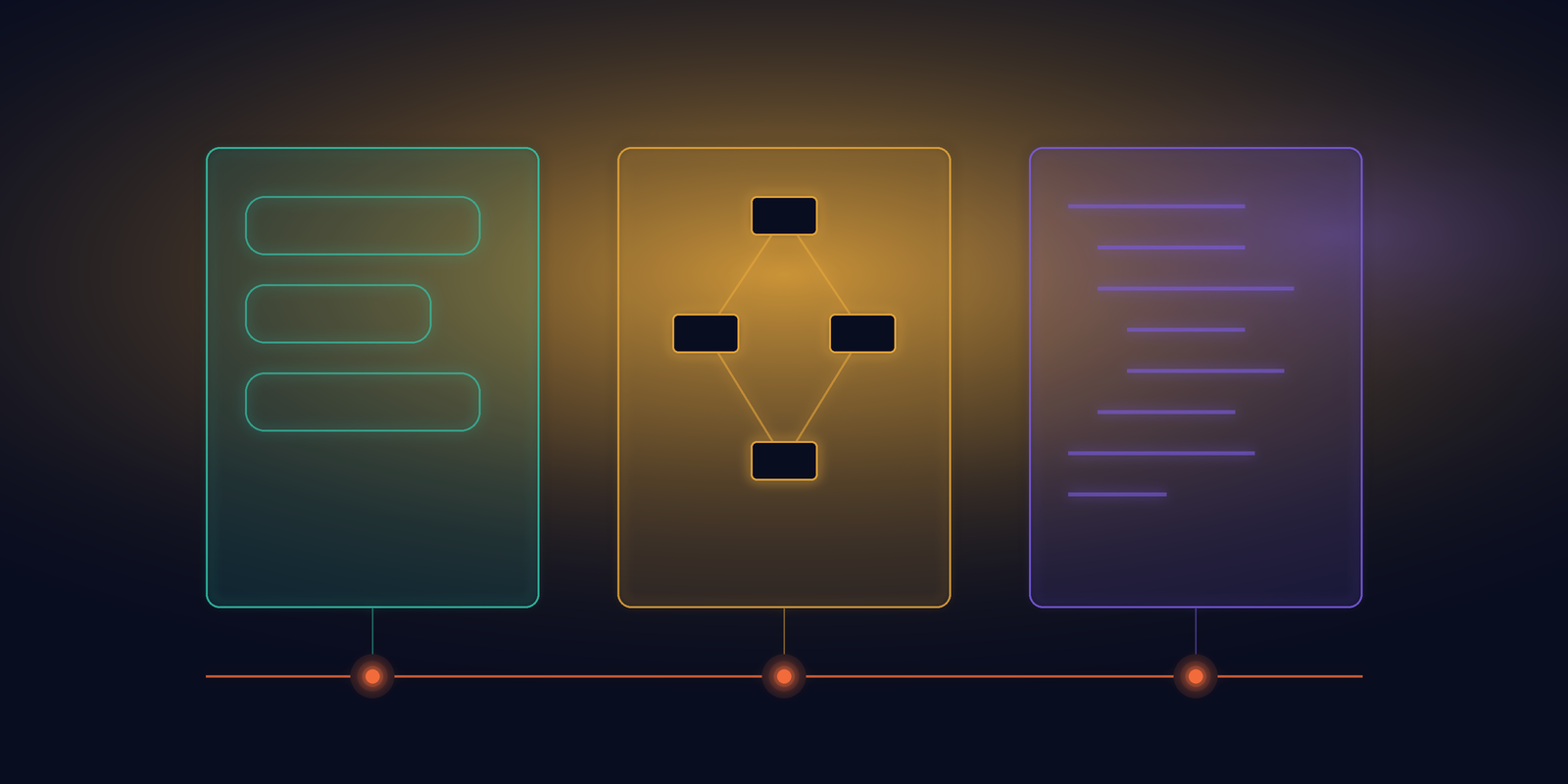
flexday.ai offers three build modes on one solution, so nothing is thrown away when the solution grows up.
| Build mode | Who uses it | What they do |
|---|---|---|
| No-code | Business users, citizen developers | Describe the solution in plain English, start from a template, chat with the agent to test it |
| Low-code | Analysts, solution designers | Edit the flow graph visually: triggers, conditions, switches, expressions |
| Full code | Engineers, enterprise architects | Work in source with round-trip editing back to the visual builder |
Business users and engineers work on one artifact, not two products. A citizen builder can describe a leave-management app on the home screen. An architect can then add a ServiceNow integration, a human-in-the-loop approval gate and a regression test suite to that same app.
What guardrails keep citizen-built AI safe?
Governance is part of the platform, not a step someone has to remember. Every solution on flexday.ai, however it was built, gets:
Identity-based permissions. Access comes from your identity provider, and an agent cannot show a user anything they could not already see.
Audit trails. Every prompt, context and decision is logged.
Versioning. Draft, test, publish and roll back, with every published version kept.
Human-in-the-loop gates. Sensitive or low-confidence decisions route to a person.
Measured accuracy. Expert-owned golden sets and regression tests on every release.
Compliance. The platform is covered by SOC 2, ISO 27001, ISO 42001, HIPAA, GDPR, CCPA and NIST frameworks.
An AI Center of Excellence ties it together. Flexday helps clients set one up with an intake process, a scoring model, decision gates and a shared definition of done, so the best citizen ideas get promoted to production on purpose.
What can citizen developers build on flexday.ai?
Common first builds include:
An HR assistant that answers policy questions and raises cases, starting from the HR Navigator template
A leave-management tracker
A sales dashboard with an AI-written weekly summary
A supplier status bot that reads purchase orders
A flow that drafts a few sentences of insight on any analytics screen
For bigger needs, teams start from a prebuilt Edge product, such as ConsumerEdge or PeopleEdge, and configure it rather than building from scratch.
How do you scale from one citizen-built app to an enterprise program?
Let business users prototype with no-code and templates, on approved data.
Score the ideas on value, feasibility, data readiness, risk and reuse.
Promote the winners through stage gates, with architects adding integrations and tests.
Measure accuracy against a golden set before go-live.
Reuse agents, flows and fact bases in the next solution.
Frequently asked questions
What is citizen-built AI?
Citizen-built AI is AI software built by business users with no-code or low-code tools rather than by professional developers.
Is no-code AI secure enough for enterprises?
It can be, if governance is built into the platform. On flexday.ai, every solution inherits identity-based permissions, audit logs, versioning and compliance controls automatically.
Can engineers edit a no-code AI app?
Yes. On flexday.ai, the same solution can be edited in no-code, low-code or full code, with changes round-tripping between modes.
What is the difference between citizen built and architect built?
Citizen built means a business user created the solution with no-code tools. Architect built means engineers designed it with low-code or code. On flexday.ai, both run on the same platform with the same governance.
Give your experts a builder, and keep IT in control
See how a business user and an architect build one solution together. Talk to Flexday, or read How to Build Enterprise AI Agents.