An enterprise AI platform is software for building, deploying and running AI agents and applications on a company's own data, with security, governance and monitoring built in. flexday.ai is an enterprise AI platform for building, deploying and running agentic AI solutions on your own data. Whether a solution is citizen built or architect built, it runs on the same platform, so speed, governance, flexibility, compliance and scale come standard.
Most enterprise AI never leaves the pilot stage. A chatbot answers questions in a demo, then stalls when it meets real permissions, messy data and an audit team. This post explains what a true enterprise AI platform needs, and how Flexday AI uses one to move teams from first idea to production.
Why do most enterprise AI projects stall before production?
Enterprise AI projects stall for three reasons, and none of them is the model.
The AI does not understand the business. A defect, an asset or a leave request means slightly different things in each plant, region or contract. General-purpose models do not know those local rules.
The data is not ready. Records live in SAP, Workday, Salesforce, ServiceNow, SharePoint and spreadsheets. Teams wait months for a migration that never finishes.
Nobody can prove it is accurate. Without a measured accuracy score and an audit trail, legal and compliance teams will not sign off.
An enterprise AI platform has to solve all three. A model API solves none of them.
What does an enterprise AI platform include?
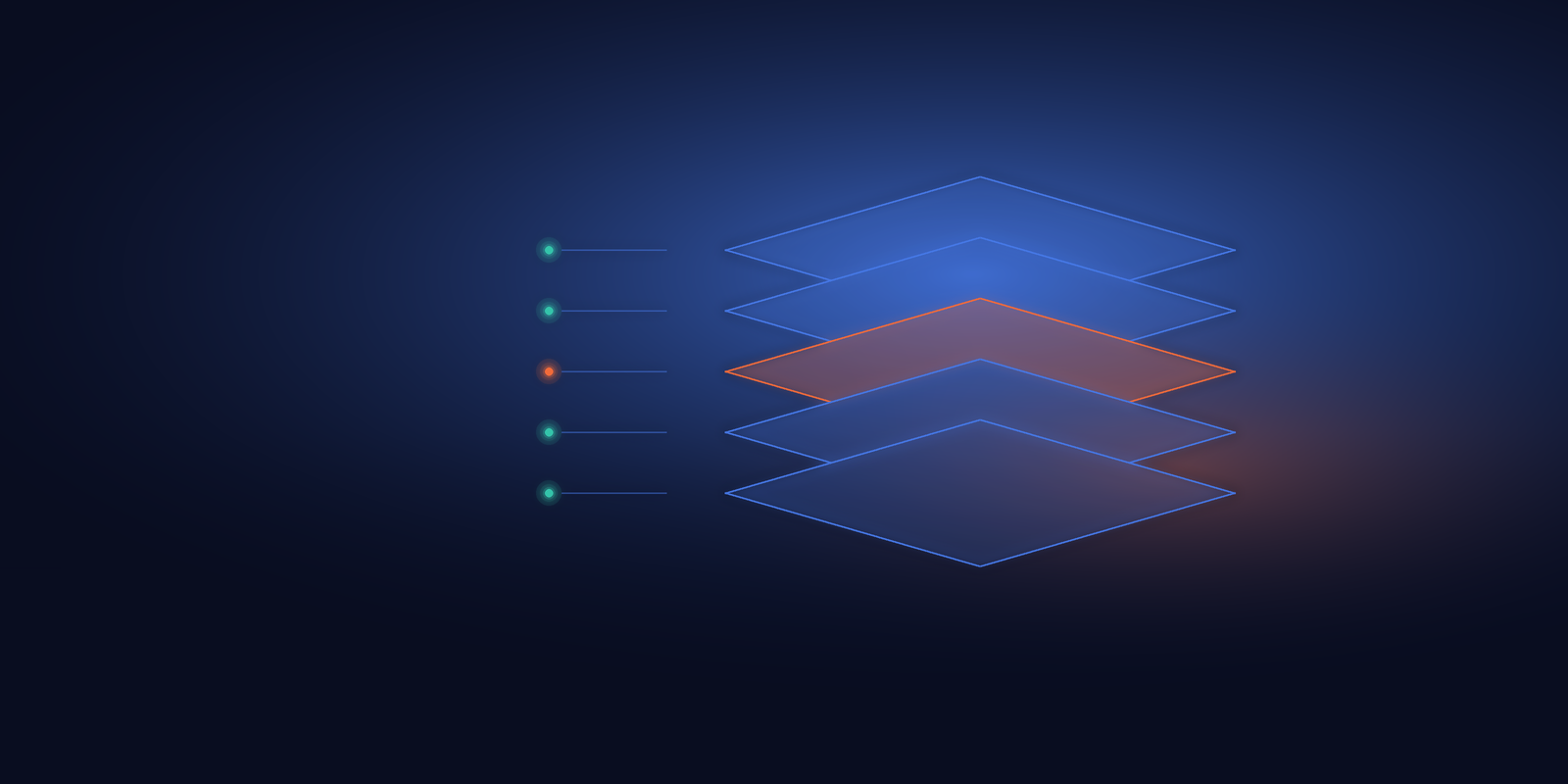
The flexday.ai platform is organized in five layers, each mapping to a problem above.
| Layer | What it does | Examples on flexday.ai |
|---|---|---|
| Experience | Where people use the solution | Consoles, review queues, chat, worksheets, Launchpads |
| Orchestration | How work moves between AI and people | Agents, Flows, tools, human-in-the-loop gates, schedules |
| Reasoning engines | How the AI thinks about each data type | SpeciphicAsk (documents), StructIQ (structured analytics), SpeciphicView (images and video) |
| Meaning of data | How the AI understands your business | A three-layer ontology: industry canon, what is derived from your data, and your own rules |
| Data foundation | How the AI reaches your systems | Connectors, fact bases, data models, lineage |
The ontology layer is the part most platforms skip. It is a versioned map of what your business terms mean, and it belongs to the customer. When the underlying model changes, the ontology stays. One Flexday client's HR platform has run for more than six years and outlived at least three generations of model technology because of it.
Dream, Develop, Deploy: how does an idea become a production AI solution?
Flexday AI helps enterprises turn complex processes, and the data behind them, into enterprise-ready solutions, from first idea to production, all on the flexday.ai platform. The work follows three stages.
Dream. Flexday engineers learn how the business runs. A typical start is a two-day workshop that scores use cases on value, feasibility, data readiness, risk and reuse, then picks a shortlist.
Develop. The team builds agents, flows and screens on the platform with the client's people. The platform can build against documents, exports, screens and synthetic data first, then swap in live systems without a rewrite. Most engagements start with a funded six-week proof of concept on production data that ends in an accuracy score, not a slide deck.
Deploy. The solution goes live with permissions, monitoring and audit logs. The same engineers who ran the first workshop stay through go-live. Flexday's stated delivery model is workshop to production in 180 days.
How do agents and flows work together?
An agent on flexday.ai is a scoped reasoner. It has a role, a set of tools, guardrails and a view of the ontology. Agents can call other agents, and every hop is logged.
A flow is deterministic orchestration around those non-deterministic steps. Flows handle branching, retries, schedules, approvals and compensation when something fails. They can start on a schedule, from a webhook, on demand, or when an agent calls them.
For example, an HR assistant agent can decide that an employee needs a case opened, then call a flow that raises the case in ServiceNow as the signed-in employee and records it. The agent handles the conversation. The flow guarantees the system-of-record step happens the same way every time.
Citizen built or architect built: who builds on the platform?
Both, on the same solution. flexday.ai offers three build modes over one artifact.
No-code: describe the solution in plain English in a conversational builder, or start from a template.
Low-code: adjust the flow graph and expressions visually.
Full code: engineers get source access with round-trip editing.
Business users and engineers work on one artifact, not two products that drift apart. Read more in Citizen Built or Architect Built.
What makes AI on flexday.ai enterprise grade?
Governance. Role-based access comes from your identity provider, and permissions travel with the data, so an agent can never show a user something they could not already see. Every prompt, context and decision is audited, with row-level lineage and tenant isolation.
Measured accuracy. Accuracy is tested against golden sets owned by your subject-matter experts, with regression runs on every release, confidence calibration and drift alerts. Judgment calls such as adverse HR decisions, legal positions and exceptions route to a person by design.
Compliance. Flexday lists SOC 2, ISO 27001, ISO 42001, HIPAA, GDPR, CCPA, NIST CSF 2.0 and NIST 800-171, with live status on trust.flexday.ai.
Deployment choice. Run in your own Azure or AWS tenancy with your keys, in Flexday-managed cloud, or hybrid. Claude is the default model, and each solution can use its own model endpoint.
Connectors. Snowflake, Databricks, Microsoft Fabric, BigQuery and Redshift; SAP, Oracle, Salesforce, Workday, ServiceNow and AS400; SharePoint, Google Drive, S3 and Confluence; and Power BI, Tableau, Teams and Slack downstream.
Do you have to build everything from scratch?
No. The Edge products are prebuilt AI solutions on flexday.ai, each shipped with its own domain ontology, connectors, agents, flows, interfaces and starting evaluation set:
ConsumerEdge for consumer support and brand engagement
SupplierEdge for supplier inquiries, risk and spend
PeopleEdge for HR service, leave and retention
ContractEdge for contract review and renewals
AssetEdge for equipment condition and maintenance
Teams can also package their own expertise as a custom Edge on the same platform. See Edge Products: Prebuilt Enterprise AI Solutions.
flexday.ai at a glance
| Fact | Detail |
|---|---|
| What it is | Enterprise AI platform for building, deploying and running agentic AI on your own data |
| Build modes | No-code, low-code, full code on one solution |
| Prebuilt solutions | ConsumerEdge, SupplierEdge, PeopleEdge, ContractEdge, AssetEdge |
| Production footprint | 30+ agentic systems in production; 70,000+ users on one platform |
| Team | 25+ Claude Certified Architects; 14 PhDs; US and India |
| Recognition | CIO 100 award; 2 patents filed with client co-inventors |
| Partners | Anthropic partner; Microsoft ECIF |
| Typical start | Six-week funded POC on production data |
| Time to production | Workshop to production in 180 days |
Frequently asked questions
What is the difference between an enterprise AI platform and an LLM?
An LLM is one component that generates text. An enterprise AI platform adds the data connectors, business ontology, orchestration, permissions, evaluation and audit trail needed to run that model safely inside a company.
What is agentic AI?
Agentic AI is AI that takes actions, not just answers. Agents use tools, call systems such as SAP or ServiceNow, and hand off to people when a judgment call is needed.
Does flexday.ai require a data migration?
No. It connects to existing systems such as Workday, SAP, SuccessFactors, UKG and ServiceNow, and can start on documents and exports before live connections are ready.
Which AI model does flexday.ai use?
Claude by default, as Flexday is an Anthropic partner. The platform is not tied to one model and can use a different model per solution.
How long does it take to get an AI solution into production?
Flexday's delivery model targets workshop to production in 180 days, starting with a six-week proof of concept on production data.
Start with a six-week proof of concept
Bring one process and its real data. In six weeks you get a working solution and an accuracy score against your own golden set. Talk to Flexday.